Column 8: The registered letter
Choosing the name of a product is no trifling matter. Not only does the name have to sound good, but it must also be unique and evocative, so as to anchor itself in the minds of consumers. And it must be legally available to be registered as a trademark.
At the beginning, the cannery was not concerned with these kinds of marketing and legal issues. Its products were sold under the Rougemont name, but the name was not registered. And this wasn’t a problem – so long as the company was content to limit itself to canned tomatoes and beans.
In the 1950s, Willie Lassonde, Aristide’s son and heir, began to think about Rougemont’s most valuable asset. With its many orchards, the area was on its way to becoming the apple capital of Quebec. This led Willie to consider the possibility of adding apple juice to the product mix. The idea made perfect sense, but a major obstacle loomed.
For many years, the Coopérative Montérégienne, also based in Rougemont, had been producing apple juice under the registered trademark Mont- Rouge. The company’s management was worried – with good reason – about the entry into the market of a Rougemont brand apple juice and the possible confusion it would create among consumers. For Lassonde, the problem was that Rougemont canned vegetables were already known under the Rougemont name and the company wanted to leverage that modicum of brand recognition.
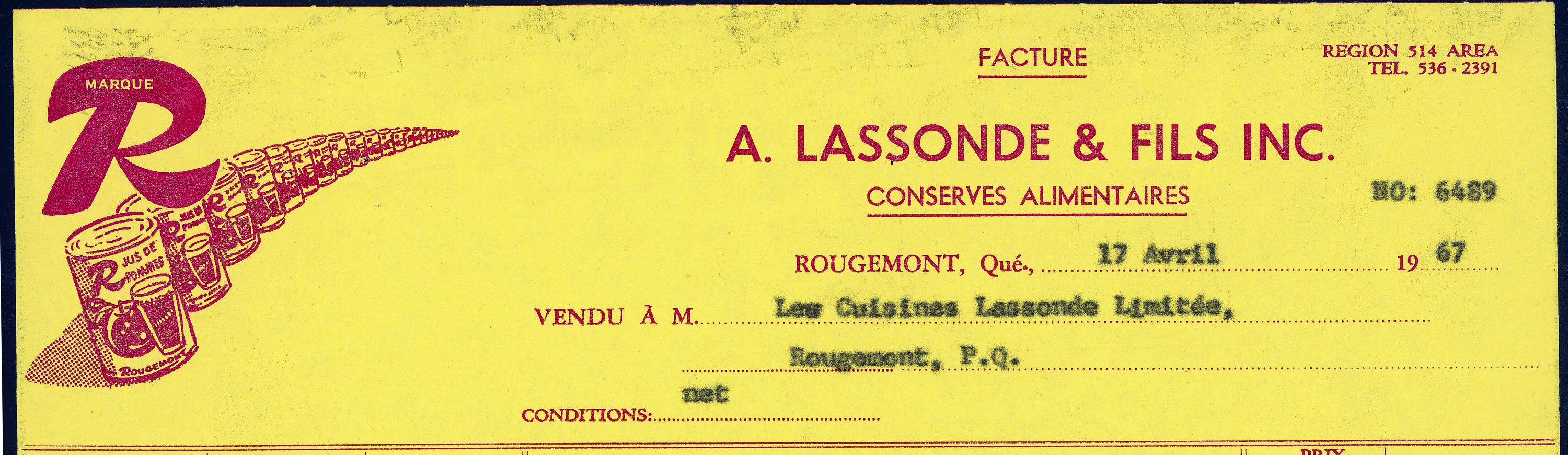
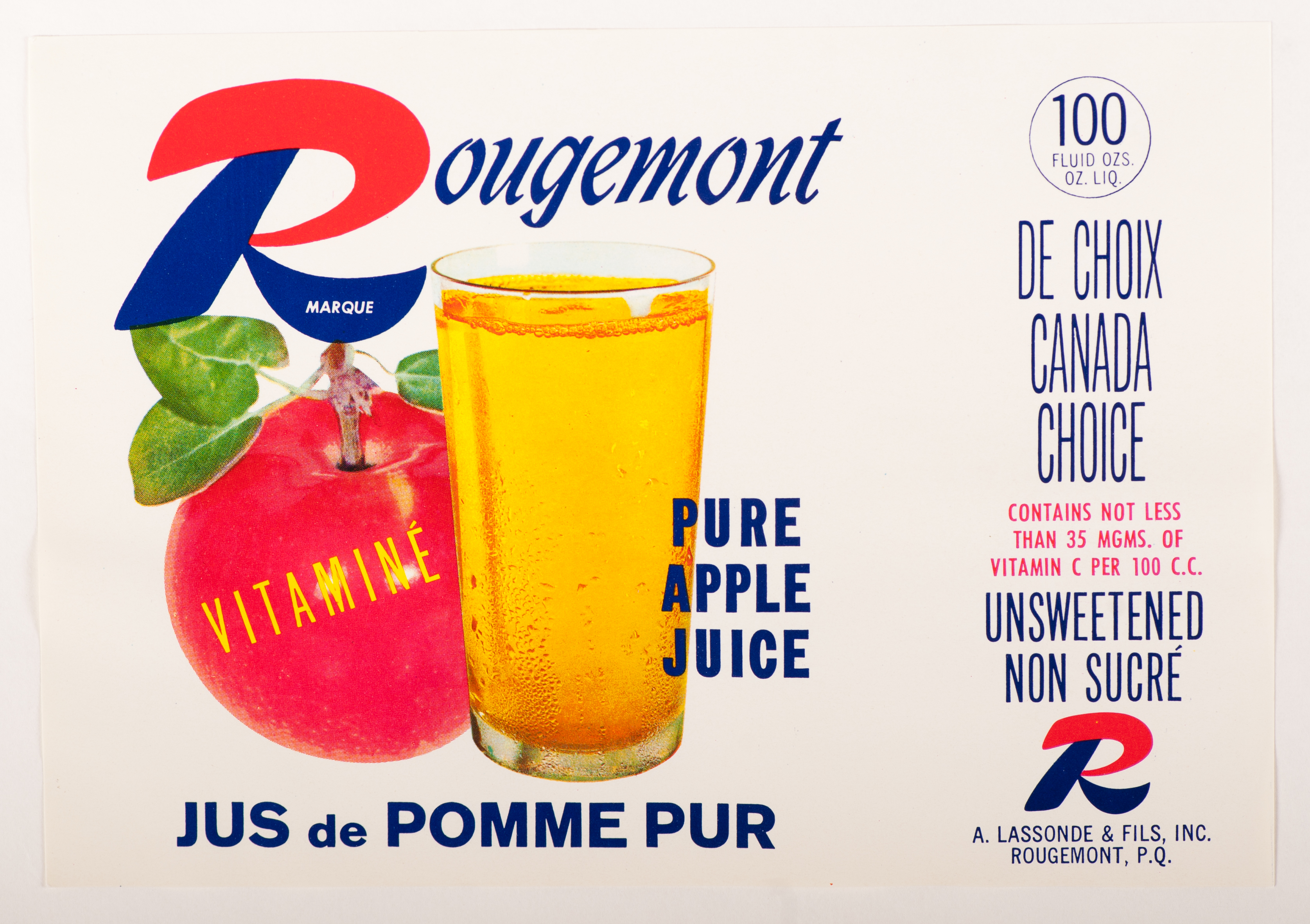
The solution it arrived at was to register the “R”, while leaving the rest of the letters in “Rougemont” at a slight remove and in a smaller type size. Did this appease the Coopérative? Perhaps, but the issue was settled once and for all in 1977 when Lassonde bought the company.
Next column: A demanding grocer…