Caring for the planet
Pillar 3 of our sustainability strategy
Our commitment to the environment is a fundamental pillar of our long-term strategy. We want to take meaningful steps to mitigate the environmental risks associated with packaging use. We demonstrate resilience and adaptability, while remaining determined to make the necessary efforts to meet sustainability challenges.


As a leader in North America’s food and beverage industry, we produce a significant amount of packaging each year, mainly polyethylene terephthalate (PET), multilayer cardboard, glass and aluminum packaging. Making our packaging more sustainable is a strategic imperative to meet the challenges of sustainable development and remain competitive. We want to take meaningful steps to mitigate the environmental risks associated with packaging use and respond effectively to growing consumer and regulatory concerns.
We reached 25% recycled content in our 1 to 2 L PET bottles in Canada and in some 48, 64, and 96 oz formats in the United States.
We acquired software for analyzing life cycles and evaluating various packaging components, focusing on eco-design and best practices.
We replaced non-recyclable sleeves with PET for 1.36L SunRype Slim products and for 240ml private label sauce products, helping improve the recyclability of the packaging.
We displayed the How2Recycle® logo on 100% of Northland products and 78% of Apple & Eve products, to guide consumers in sorting the packaging for recycling.
2022 to 2024 historical recycled content data are based on purchase volumes for that fiscal year. Recyclability and recycled content percentages are calculated based on packaging weight. We use our suppliers’ annual averages for recycled content and our annual purchase volumes of recycled and virgin PET granules. Paper straw percentages are based on sales of our branded products in Canada and the United States for that year. 2022, 2023 and 2024 data excludes our Boardman plant, acquired in August 2024.
For more data, see our Sustainability Report 2025.
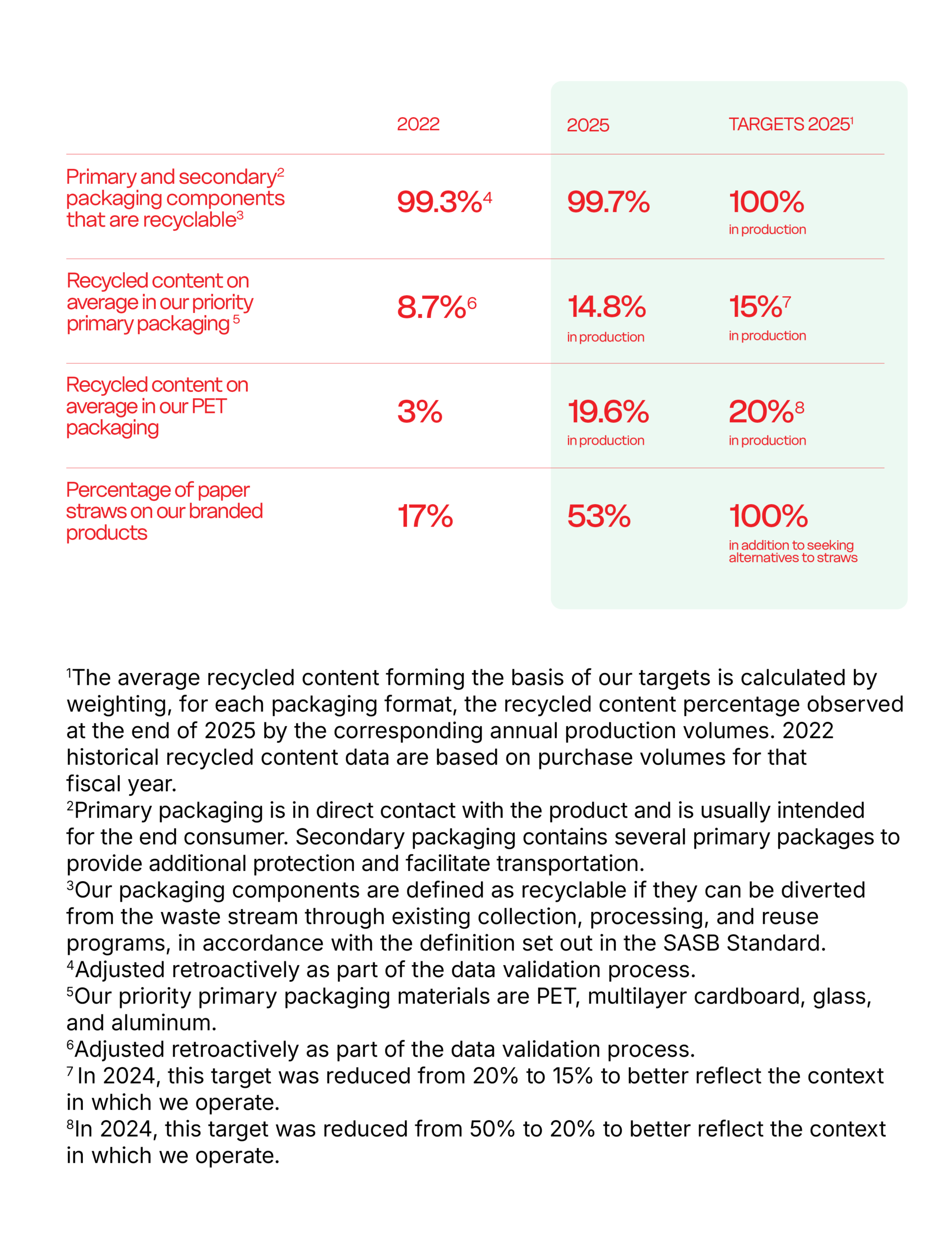

Maintain an average of 20% recycled content in our PET primary packaging.

Move towards full recyclability of our packaging, aiming for 100% recyclable packaging.
We recognize the seriousness of climate change and the urgent need for collective action. Reducing our carbon footprint is a priority for our organization. Climate change is affecting and will continue to affect all aspects of our operations, from raw material sourcing to product manufacturing and distribution.
We implemented a new platform to collect data on our Scope 3 emissions and completed inventories for 2023, 2024, and 2025.
We installed energy measurement systems in our two Rougemont plants to better track and detail energy consumption and more effectively design and prioritize future efficiency projects.
We identified compressed air leaks and losses in multiple plants in the United States and Canada, enabling more efficient electricity use. We also modernized and optimized our steam generation systems in our California and Kelowna plants.
We initiated discussions with some of our key packaging suppliers, representing approximately 57% of emissions associated with our packaging purchases, to obtain more accurate emissions data and gain insight into their reduction efforts.
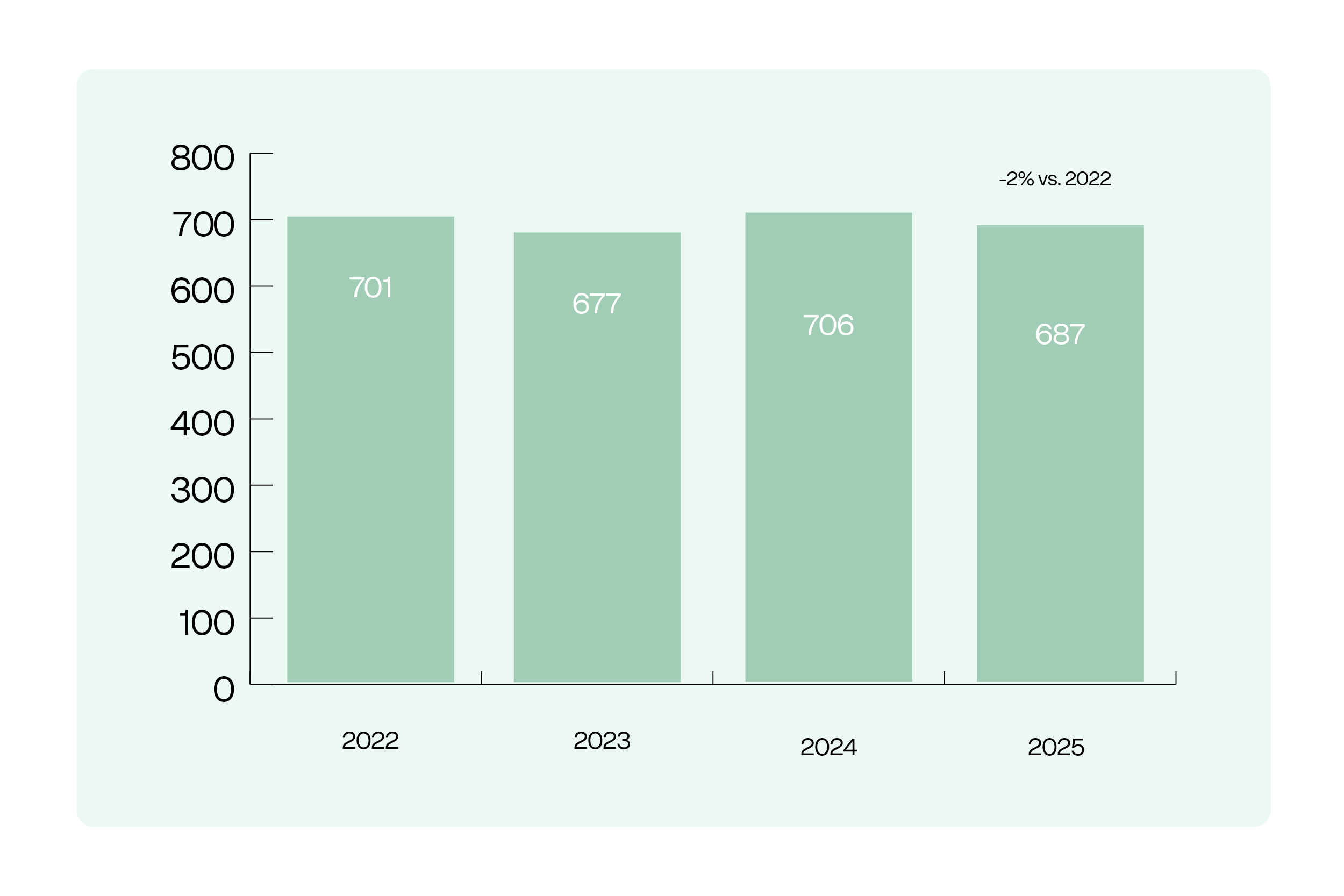
By 2030, reduce our absolute Scope 1 and 2 emissions by 20% against our 2022 baseline.
Scope 1 and 2 emissions in metric tons of CO2e
Figures for 2022 to 2024 have been adjusted as part of the normal validation process.

By 2030, reduce our Scope 3 emissions by 20% in intensity against our 2022 baseline.
Our intensity target applies to Categories 1, 3, and 4, which represent over 90% of our Scope 3 emissions.
Emissions intensity (gCO2e/L of product)
The 2022 figures were adjusted as part of the data validation process. For our products reported by weight (kg), we have estimated a density of 1 kg/L

The quality and availability of drinking water are global issues. They affect everything from the cultivation of our raw materials to their processing. As well as being an important ingredient in our products, we use water to sanitize our equipment, an essential aspect of maintaining the safety and quality of our products.
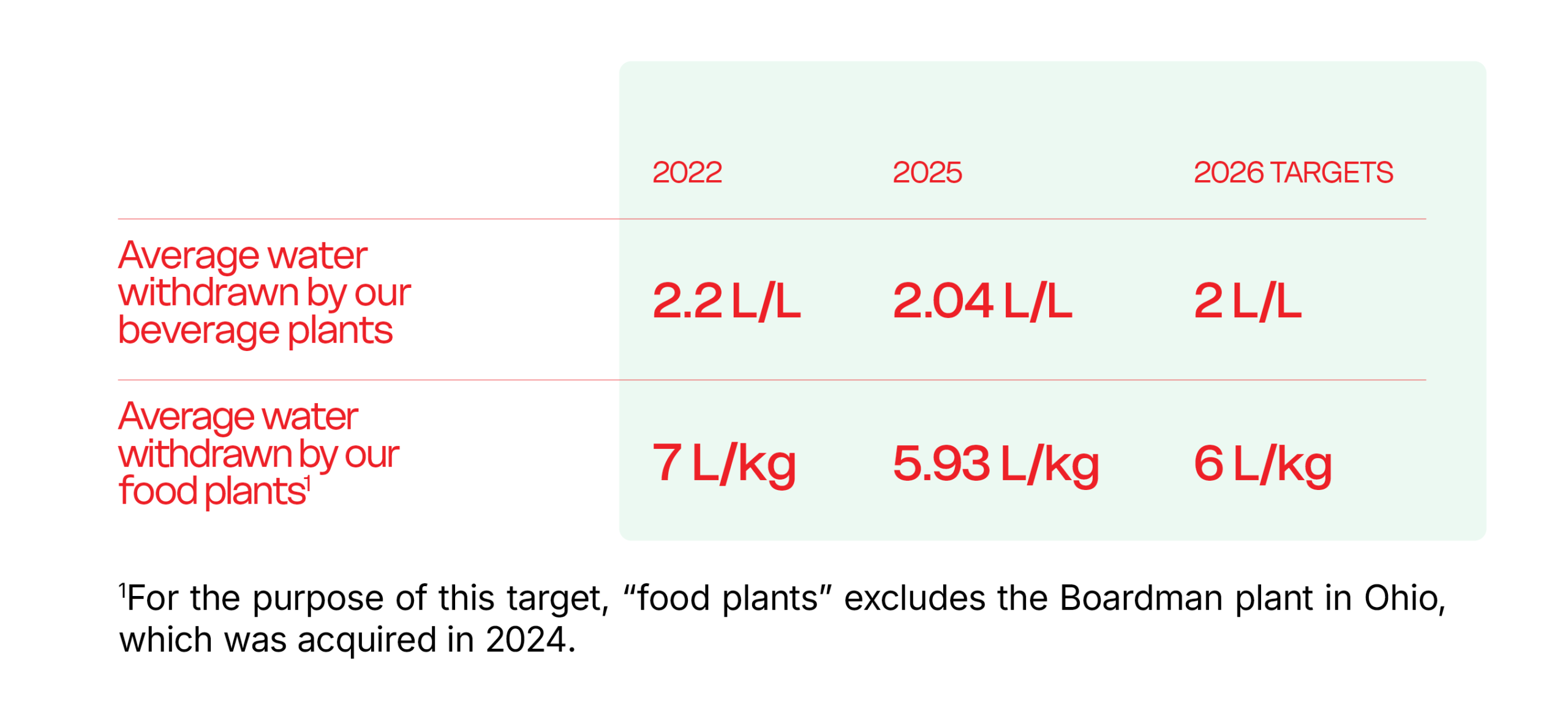
We reduced the average water withdrawal ratio at our beverage plants to 2.04 liters per liter of product, representing a 4% reduction compared with 2024 and bringing us closer to our 2026 target. This reduction was made possible in part through water-saving initiatives for bottle rinsing at our 5th Avenue plant in Rougemont, as well as by replacing the juice cooling process with a system that uses glycol instead of water at our Kelowna plant.

Our strategy is guided by the importance of creating a zero-waste culture that promotes reduction at the source, reuse and recycling. With the commitment of our teams, the development of partnerships with local recyclers and the implementation of innovation projects, we will be able to effectively manage our waste and reduce our environmental impact.
Global interest in valorizing food residues is booming. Since we produce significant quantities of pulp from fruit pressing, we are fully embracing this trend and intensifying our efforts to transform these materials into high-value resources.
Our innovation team is actively pursuing research, collaborations, and partnerships with universities, research centers, and various other external partners. Together, they are exploring new avenues for processing and valorization, such as optimizing existing processes, integrating new ones, extracting valuable compounds, and developing technologies to reintroduce by-products into human and animal food.
These initiatives aim not only to reduce waste but also to position us as a key player in the circular economy within the agri-food sector.
The 2023 and 2024 data exclude data for our Boardman plant, acquired in August 2024.

Learn more about our initiatives for caring for the planet in our 2025 Sustainability Report.